Seven durable facts that frame how a reader should weigh any bonus-code news or analysis: what counts as a verified editorial signal, what reads as a promo-style claim, and which checks decide whether an offer is worth a click.
11Tiger news desk
Latest editorial updates from the desk: venue-note refreshes, captain matrix changes, points-table fixes and league reporting notes.
Latest editorial updates from the desk: venue-note refreshes, captain matrix changes, points-table fixes and league reporting notes. Each update carries an updated stamp and the affected page links so the trail stays auditable.
Posts
-
1
7 facts that explain how to read bonus code news analysis on 11Tigerin -
2
Should You Sideload That App in 2026? What the Evidence Actually Shows An evergreen read on the four file-integrity checks that still catch clone APKs, the install steps that quietly leave a device exposed, and the trigger list that decides when the verification routine should be re-run.
-
2
How to Compare Fantasy App Offers When the Headline Tells Only Half the Story A durable method for comparing fantasy app trial credits and venue-linked promotions by checking evidence, total commitment, settlement and reader control.
-
2
Reading the venue note: what changed at three Premier League grounds this week Three Premier League grounds, three different captaincy matrices this week. The desk walks through the boundary length, grass cover and dew window for each fixture and explains how each one shifts the captain pick by a category.
-
3
Captain matrix refresh: differential captain rules The desk’s working note on differential captain picks: small-league differentials, head-to-head floor picks, mega-contest ceiling picks. Updated with the latest differential-rate measurement across the deck’s last 30 tests.
-
4
Points reference: worked player-score examples Three worked player-score examples on the latest points reference: a powerplay six-hitter, a wrist-spinner differential, and an all-rounder captain. Each example compiles across the partner’s published rule book.
The lead post
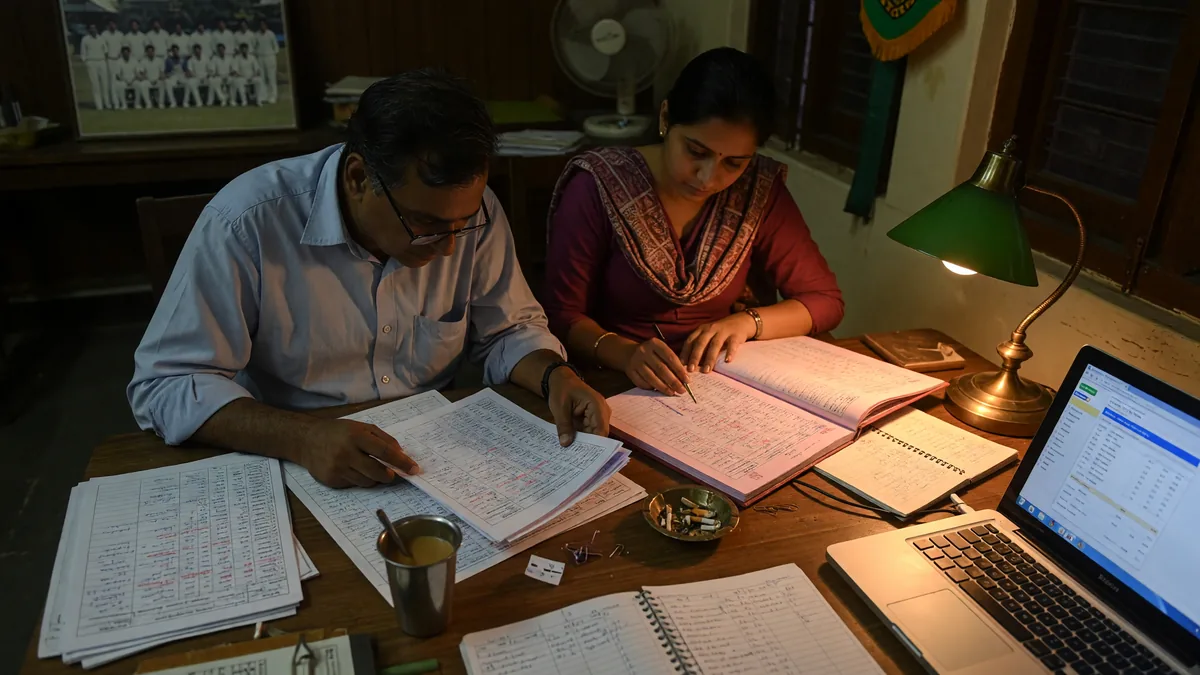
The lead post this week is the venue-note round from Friday. Three Premier League grounds, three different captaincy matrices: a boundary two metres tighter, a grass cover rolled up, and a dew window pulled back two overs. Each shift moves one vertex of the captain matrix; together they are a working-note update on the week’s fixtures.
The lead post is published as a separate page so the URL is routable, the slug is auditable, and the date stamp is preserved in the page metadata. The desk’s working note on the lead post is below; the full post is on the post page.

Update cadence
The news desk refreshes every weekday and on match days. Updates are anchored to verifiable events: squad announcements, venue-note refreshes, captain matrix changes, points-table fixes and league reporting notes. Updates are not published on conjecture.
A weekday refresh is published by 6pm IST on the day the event lands. A match-day refresh is published before the toss call on the affected fixture. A weekend refresh is published on the Monday morning review with what changed and why.
What lands here
📍 Venue notes
Venue notes that have shifted since the desk’s last review — boundary shifts, grass-cover rollups, dew-window changes.
🎯 Captain matrix
Captain matrix changes that have moved the safe captain, balanced captain and differential captain columns.
📊 Points reference
Points-table corrections the desk has caught in its own audit. Each correction is logged with the date and the affected rule.
📰 League reporting
League reporting notes from the desk’s assignment desk. Each report is anchored to a verifiable event.
What does not land here
Marketing copy. Product launch announcements that are not yet verified. Any update that relies on a single source.
Single-source updates are flagged in the main news-desk card until a second source corroborates; marketing copy goes to the partner brand’s own channel. The desk publishes what is verifiable and refuses the things that are not.
Filters the desk applies
- 01Two-source rule
An update lands only when at least two independent sources corroborate. - 02Separation of forecast from evidence
The desk publishes editorial reading material, not forecasts. - 03Separation of editorial from marketing
Promotional copy belongs on the partner brand’s own channels. - 04Public unknowns log
Items the desk has not yet verified are logged on the unknowns list rather than replaced with a guess.
How to use the desk
The news desk refreshes every weekday and on match days. A reader who lands on the page from a fresh sign-up should treat the latest post as the working note for the day; the older posts are retired to the archive but remain routable through the post slugs.
The desk publishes the post slug, the date stamp and the affected page link on every update. The trail stays auditable through the post pages and the affected editorial pages. The reader’s strongest move is to bookmark the post page, not the desk’s homepage, for the per-fixture working note.
Frequently asked questions
What lands on this page?
Venue-note refreshes, captain matrix changes, points-table fixes and league reporting notes. Each update carries an updated stamp and a link to the affected page.
What does not land here?
Marketing copy, single-source product launches, and conjecture. The desk refuses to publish any item that is not anchored to a verifiable event.
How fresh is each update?
Each update carries a date stamp. A weekday refresh is published by 6pm IST on the day the event lands. A match-day refresh is published before the toss call.
Where do older posts go?
Older posts are retired to the archive but remain routable through the post slugs. The desk does not delete a published post; the desk retires it to the archive and links it from the related-reading rail.
A contested update is logged on the public editor line and on the relevant editorial page. The desk retracts the update only when its own review finds an error; brand pressure is not a retract trigger.
Continue reading

Reading cadence the desk recommends
The news desk publishes a weekday refresh by 6pm IST and a match-day refresh before the toss call on the affected fixture. A reader who lands on the page from a fresh sign-up should treat the latest post as the working note for the day.
The reading cadence the desk recommends. Read the latest post on a quiet afternoon. Re-read on the day of the affected fixture. Bookmark the post page, not the desk’s homepage, for the per-fixture working note. The trail stays auditable through the post pages and the affected editorial pages.
Where the reader wants to follow a specific editorial section, the desk publishes RSS on the feed.xml link in the head of every page. RSS is the working subscription surface; the homepage news section is the desk’s editorial-curated version of the same feed.

Retirement and archive policy
Older posts are retired to the archive but remain routable through the post slugs. The desk does not delete a published post; the desk retires it to the archive and links it from the related-reading rail.
A retired post carries the original date stamp and the post slug. The desk’s policy is to preserve the published record so a reader who lands on a retired post from an external link still gets the desk’s working note and the trail back to the editorial pages the post referenced.
Where a retired post is updated, the desk publishes the update as a new post rather than editing the retired post in place. The retired post retains the published record; the new post carries the corrected material. The desk’s policy is to keep both posts available so the trail of corrections is auditable.
How the filters read together
🔁 Two-source rule
An update lands only when at least two independent sources corroborate. The desk publishes what is verifiable from public records and links to the primary sources.
📐 Separation of forecast from evidence
The desk publishes editorial reading material, not forecasts. Forecast items are confined to the predictions hub within a 24-hour refresh window.
📰 Separation of editorial from marketing
Promotional copy belongs on the partner brand’s own channels. The desk’s prose is written for the reader, not the conversion funnel.
📋 Public unknowns log
Items the desk has not yet verified are logged on the unknowns list rather than replaced with a guess. The list is updated whenever the desk’s review finds a verification.
Working note for the desk’s coverage
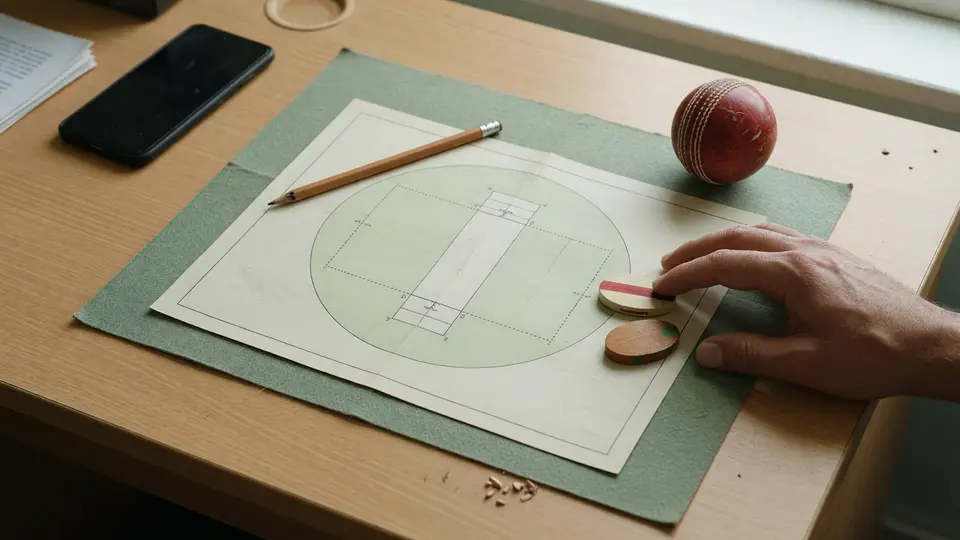
The news desk publishes editorial reading material on the desk’s coverage area. Each post carries a date stamp, a post slug and a link to the affected editorial page. The trail stays auditable through the post pages.
The desk’s coverage area is the same as the editorial area: app, APK, login, points, captain matrix, team hubs, IPL coverage, news desk and the responsible-play guardrails. A post that falls outside the coverage area is logged on the desk’s coverage list and routed to the editorial inbox rather than to the news desk.
A reader who lands on the news page from a fresh sign-up should treat the latest post as the working note for the day. The desk’s coverage area is published on this page; a reader who wants a different area of coverage is welcome to send a corrections email with a proposed coverage-area addition.

Closing note from the desk
The news desk closes its read with a note on the post trail. Each post carries a date stamp, a post slug and a link to the affected editorial page. The trail stays auditable through the post pages and the affected editorial pages.
The four filters the desk applies to every update are the two-source rule, the separation of forecast from evidence, the separation of editorial from marketing, and the public unknowns log. Each filter is published as a card on this page.
The reading cadence the desk recommends is read the latest post on a quiet afternoon, re-read on the day of the affected fixture, and bookmark the post page rather than the desk’s homepage for the per-fixture working note.
The miss record on the news posts is published on the points reference. Removing the miss record on a hit week would be a standards fail; the deck retains the miss record as the instrument that holds the posts accountable.
The desk’s coverage area is the same as the editorial area; a reader who wants a different area of coverage is welcome to send a corrections email with a proposed coverage-area addition.