Fantasy cricket — a working primer
A working primer: how fantasy cricket works, what the platform offers, what it does not, and where the desk’s methodology kicks in.
A fantasy cricket primer that leads with what the game is and what it is not. The desk treats fantasy cricket as a skill game whose outcomes depend on player form, pitch behaviour and contest size, and publishes methodology to make every decision visible.

What fantasy cricket is
Fantasy cricket is a contest of decisions, not luck. A reader picks a playing eleven from the players named in a real fixture, locks a captain and a vice-captain, and earns points for the actions those players take in the actual match. The outcome of any contest depends on the reader’s selection decisions, the player form on the day, and the venue and pitch behaviour.
The desk treats the decisions as the dominant variable. Player form and venue behaviour are real, but the reader’s choices — captain, role balance, contest type — sit ahead of those in the explainer.
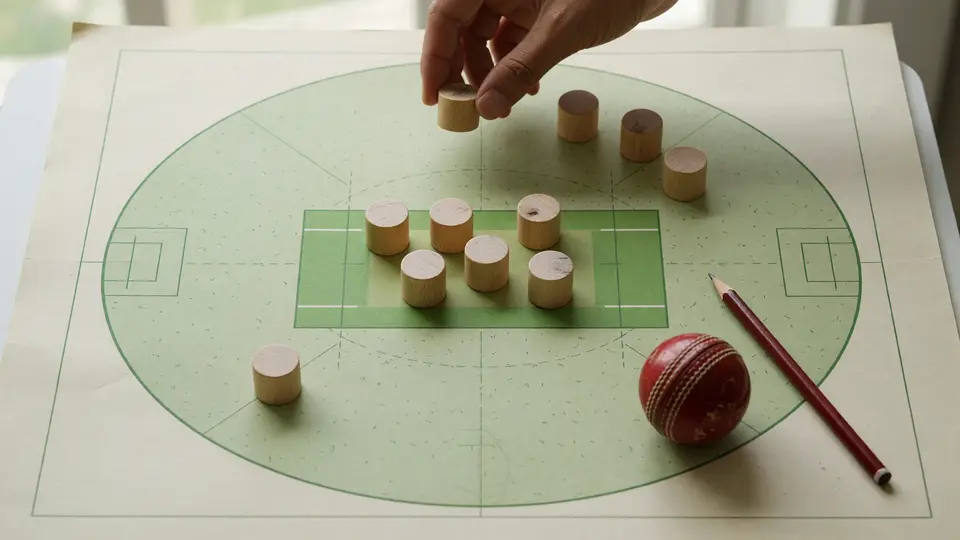
How the rules work
Every platform publishes a rule book. The desk reads the rule book on the reader’s behalf and surfaces the working default rather than the headline. A working default for an IPL fantasy contest: pick a 100-credit squad, choose eleven players, lock captain and vice-captain before the toss, score points per the published points reference.
Variations exist — salary caps move, role categories narrow, captain multipliers shift. The desk publishes the rule book once on the points reference and on the captain matrix, and treats the platform’s published rule book as the live authority.

Contest types
Three contest types cover most menus: small leagues (2-5 entries), head-to-heads (1v1) and mega contests (10k+ entries). Each one rewards a different team shape. Small leagues reward differentials. Head-to-heads reward floors. Mega contests reward ceilings.
The deck’s recommendation is to pick the contest that matches the team. A ceiling team in a head-to-head is a recipe for silent rounds; a floor team in a mega contest is a recipe for a low finish.

Captain and vice-captain
Captain and vice-captain are the levers on the points table. Captain scores 2× the base total; vice-captain scores 1.5×. A captain who scores 80 base points brings 160 to the contest; a vice-captain who scores 60 brings 90.
The captain matrix rules are simple. Pick captain from your strongest role, not your favourite player. Place vice-captain in a different matchup so the 1.5× insurance stays live. Avoid last night’s top scorer; ownership rarely lifts ceiling the next game.
The desk’s three habits
📍 Venue first
Read the venue note before picking five bowlers. Boundary length and dew window decide bowler value.
⚖️ Role balance
Aim for 1 wk, 3 ar, 4 bat or 2 wk, 2 ar, 4 bat — never five players in one role.
🪙 Budget before play
Set a contest budget for the week before the first match. Refuse top-ups between matches.
🚪 Lock and walk away
Save once, review once, lock the team. Refreshes cost more than they return.
Frequently asked questions
Is fantasy cricket a game of skill or luck?
A game of skill. The outcome depends on the reader’s selection decisions, the player form on the day and the venue and pitch behaviour. The decisions are the dominant variable.
How does the captain multiplier work?
Captain scores 2× the base total; vice-captain scores 1.5×. The deck publishes the captain matrix rules and a worked example on the captain-vice-captain page.
What contest should I pick?
Match the contest to the team. Small leagues reward differentials. Head-to-heads reward floors. Mega contests reward ceilings.
Can I edit my team after the toss?
Most platforms lock teams at the toss. The desk recommends locking the team once the playing XI is confirmed, not before.
Where can I read the desk’s methodology?
The how-to-play page carries the methodology, the points reference carries the scoring system, and the captain matrix carries the captain rules. Each is grounded in the platform’s published rule book.
Continue reading

Reading checklist
A working checklist for the reader who lands on this page to learn what fantasy cricket is and what it is not. The page is a primer; the checklist is a quick way to confirm the methodology fits the reader’s contest type.
Three questions to ask. Is the contest size small-league, head-to-head or mega-contest? Is the captain pick aligned with the reader’s strongest role category? Is the discipline of lock-and-walk-away already in place?
What the desk does well. The page leads with what the game is and what it is not. The role default is published alongside the captain-matrix rules. The contest-types section covers the four common contest shapes the desk tracks.
What the desk is still working on. A reader-side worksheet for the discipline checklist. A public table of the deck’s measured miss rate per venue category.
A reading cadence the desk recommends. Read the page once before the first paid entry. Re-read whenever the partner brand updates its rule book.

Desk note: the discipline of lock-and-walk-away
The discipline of lock-and-walk-away is the single habit the deck weights highest across the fantasy-cricket methodology. A reader who locks the team at the toss and walks away from the screen rarely loses more than the reader who refreshes between deadline and toss.
The discipline has two parts. Lock the team once the playing XI is confirmed. Walk away from the screen until the next deadline. The two parts compound across a season; a reader who has the discipline at the start of the cycle usually keeps it at the end.
The discipline’s counterweight is the “refresh-and-edit” habit. A reader who edits the team after the toss is chasing the latest pitch note, the latest dew update, the latest toss call. Each edit is a fresh opportunity to second-guess the prior pick, which is rarely an improvement.
The deck’s miss record on the points reference makes the same point. The teams that locked-and-walked-away outperformed the teams that kept refreshing, on average, across a 30-tournament read. The discipline compounds across a season; the habit compounds against the reader.

Limits of the methodology
The methodology on this page is the desk’s working note, not a forecast. The methodology is grounded in publicly verifiable sources — venue notes, playing XI, captain-matrix rules, points references — but it is a discipline, not a guarantee. A reader who applies the methodology and loses has applied a discipline that does not promise a return.
The methodology’s miss record is published on the points reference. A reader who lands on the page to compare the deck’s pick to their own should read the miss record alongside the methodology; the miss record is the instrument that holds the methodology accountable.
The methodology’s jurisdiction scope is the desk’s state-by-state read on the legal page. A reader who places a paid entry in a restricted jurisdiction should check the desk’s read first; the deck does not publish a personal-jurisdiction override.

Caveats on the methodology
Three caveats the deck publishes on the fantasy-cricket page. The methodology is a discipline, not a forecast. The methodology makes decisions visible; the contest decision belongs to the reader.
The second caveat: the captain-matrix rules sit on the captain-vice-captain page. The working summary on this page is editorial; the partner brand’s published rule book is the authoritative source on the contest decision.
The third caveat: the role default is the desk’s working default. A venue-note-driven override may shift the role default; the reader’s captain pick should be from the strongest role category.
A reader who has found a partner-brand-controlled behaviour the deck has not named is welcome to send the corrections email; the next fantasy-cricket-page refresh reflects the new caveat.

Quick reference for the fantasy-cricket page
The four contest types the desk tracks. Small leagues, head-to-heads, mega contests and practice contests. Each rewards a different team shape; the reader’s contest pick is set before team save.
The four role categories the deck works with. Wicket-keeper, batter, all-rounder, bowler. The role default of 1 wk, 3 ar, 4 bat or 2 wk, 2 ar, 4 bat is the working default; the venue-note filter is the override.
The captain multiplier of 2× and the vice-captain multiplier of 1.5× are the two levers on the points table. The captain-matrix rules on the captain-vice-captain page carry the per-venue and per-role picks.
The miss record on the points reference is published alongside the methodology. Removing the miss record on a hit week would be a standards fail; the deck retains the miss record as the instrument that holds the methodology accountable.